
Transfer?Membrane-Experimental Assistant in Molecular Biology, Medical Diagnosis.
2025-05-19
MS
14
What Are MS Transfer Membrane?
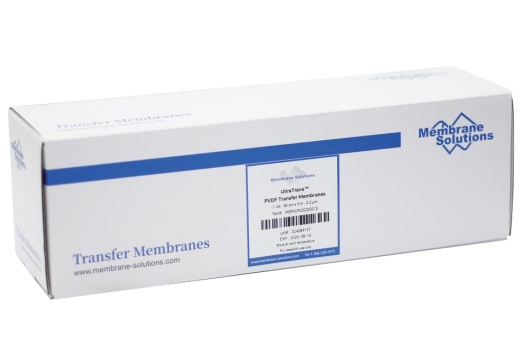
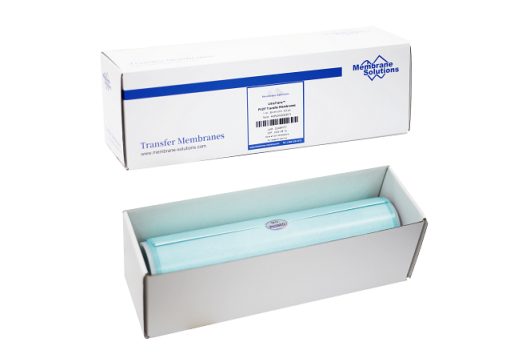
Transfer membranes are widely used in biological detection and analysis, such as protein transfer, protein immunoblotting, traditional DNA and RNA transfer, nucleic acid hybridization detection etc. Membrane Solutions provides Ultra Trans™ PVDF transfer membranes and nitrocellulose transfer membranes.
This transfer membranes have high biomolecular binding power, providing excellent sensitivity and low background. Membrane Solutions transfer membranes are tailored for specifc applications, detection, and blotting, with excellent performance. We can provide different shapes and specifications of transfer membranes according to your needs to meet your personalized need.
What Are the Features and Benefits of MS Transfer Membrane?
● Excellent mechanical strength
● High chemical compatibility
● Excellent sensitivity
● Low background
What Are the Typical Application of MS Transfer Membrane?
 ● Western blot
● Southern blot
● Northern blot
● Amino acid or protein analysis
Electron Microscopic Structure of PVDF Transfer Membrane
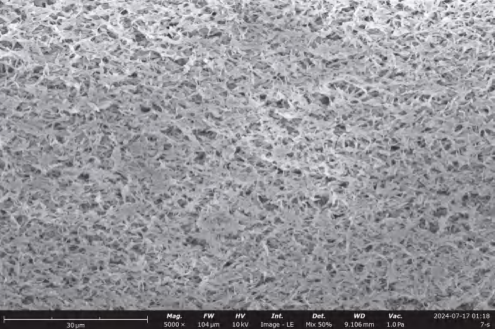
Upper surface of 0.22umPVDF Transfer membrane
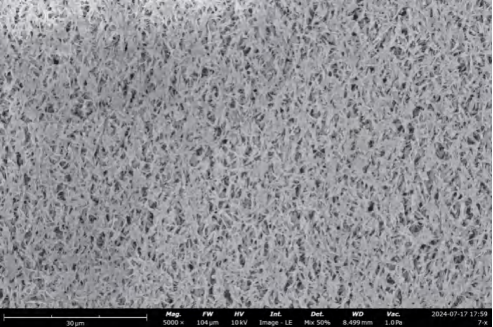
Lower surface of 0.22um PVDF Transfer membrane
The upper and lower surface electron microscopy charts show that the 0.22um Membrane Solutions PVDF transfer membrane has a tight and uniform pore structure, which has a high internal surface area, a large protein adsorption capacity, and good uniformity.
How to Choose the Right Transfer Membrane?
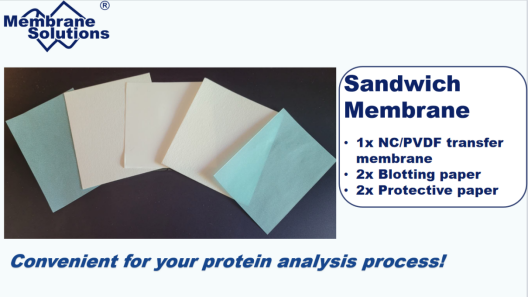
Membrane Solutions offers three transfer membranes with pore sizes of 0.2um and 0.45um: PVDF, cellulose nitrate. Each membrane is optimized for specific protein Inda applications to make protein transfer easier and more convenient. We also offer imprinted sandwiches consisting of pre-cut filter membrane and imprinted filter paper. It is widely used in biotechnology such as protein transfer, protein immunotransfer, dot/slit hybridization, traditional DNA and RNA transfer, nucleic acid detection, etc.
When selecting Transfer Membrane, you need to clear the application field and select the appropriate aperture, but also need to consider Capacity, sensitivity, durability, hydrophilicity, etc in order to choose a product that particularly meets your needs.
Conclusion
In summary, through its capillary action, Transfer membrane enables the transfer buffer to flow through the gel and bring the sample to the membrane, thereby fixing the protein or nucleic acid to the membrane surface for subsequent detection with specific probes or antibodies.
Membrane Solutions offer several types of transfer membranes, each optimized for specific blotting applications to achieve better transfer results and higher experimental success rates.
For more information on Transfer Membrane or assistance in selecting the right product for your application, feel free to contact Membrane Solutions. Let us help you achieve your filtration goals with confidence!