Reverse osmosis membrane
2025-05-26
MS
115
Industrial reverse osmosis (RO) membranes are high-performance filtration components designed to purify water by removing dissolved salts, organic compounds, and other contaminants. Using a semi-permeable membrane, pressure is applied to force water molecules through while retaining impurities. This process can eliminate up to 99% of dissolved solids, making RO membranes ideal for demanding applications in pharmaceuticals, food and beverage processing, and power generation.
At Membrane Solutions, we provide a variety of industrial RO membranes engineered for long-term durability and consistent performance. Our products ensure high water quality and operational efficiency, offering reliable and cost-effective solutions across diverse industries.
How Reverse osmosis membrane works
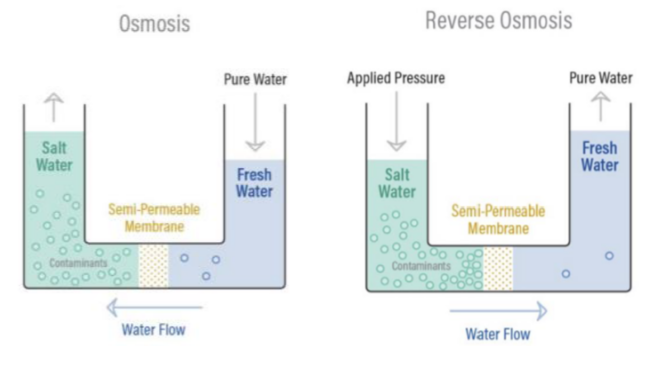
Reverse osmosis (RO) operates by applying pressure to a high-concentration solution to overcome natural osmotic pressure. Normally, when a semi-permeable membrane separates two solutions with different concentrations, water moves from the lower to the higher concentration side—this is osmosis. The pressure driving this movement is called osmotic pressure.
In reverse osmosis, applying pressure greater than the osmotic pressure forces water to move in the opposite direction—from the high-concentration side to the low-concentration side—effectively filtering out contaminants. The membrane that facilitates this process is known as a reverse osmosis membrane.
Osmotic pressure is roughly proportional to the salt concentration of the solution. For instance:
- A solution with 1,000 mg/L of solutes exerts about 0.6–0.8 kg/cm² of osmotic pressure.
- Seawater (TDS ≈ 35,000 mg/L) has an osmotic pressure around 25 kg/cm². To achieve effective desalination, RO systems typically apply pressures at least twice the osmotic pressure. In seawater desalination, separation begins around 42 kgf/cm², with optimal operation occurring at approximately 56 kgf/cm² (about 800 psi).
Types of Reverse Osmosis (RO) Membranes
In the past, asymmetric cellulose acetate (CA) membranes were commonly used in reverse osmosis (RO) systems due to their high chlorine tolerance and resistance to biofouling. However, CA membranes have limitations, including a narrow operational pH range and the requirement for high operating pressures, leading to increased operational costs. Consequently, composite polyamide (PA) membranes have become the preferred choice in modern RO applications. Compared to CA membranes, PA membranes offer several advantages:?
Larger membrane surface area/Higher water permeability/Superior salt rejection rates?
Membrane Solutions currently offers a range of RO membranes tailored to various industrial needs:?
- Xtreme Low Pressure RO Membrane?
- Ultra Low Pressure RO Membrane?
- Low Pressure RO Membrane?
- Fouling Resistance RO Membrane?
- Brackish Water RO Membrane?
These membranes are designed to provide efficient and cost-effective solutions for diverse water treatment applications.
Reverse Osmosis (RO) Membrane Maintenance Guidelines
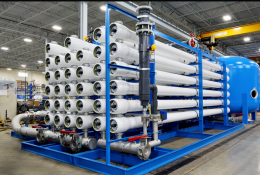
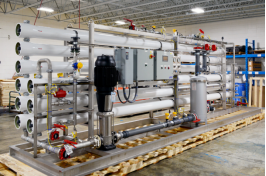
Reverse osmosis (RO) membranes are the core components of water treatment systems, and their performance directly impacts water quality and operational efficiency. To ensure long-term stable performance and extend membrane lifespan, regular maintenance is essential. Below are key best practices for maintaining RO membranes:
l Regular Monitoring of Operating Parameters
Continuously monitor critical system parameters such as feed pressure, permeate flow rate, and salt rejection rate. Any decline in permeate output or rejection performance may indicate membrane fouling or damage and should be addressed promptly.
l Maintenance of Pretreatment Systems
Pretreatment units—such as multimedia (quartz sand) filters and activated carbon filters—should be inspected and cleaned regularly to ensure optimal performance. Newly installed filter media, including quartz sand and coconut shell activated carbon, must be thoroughly rinsed to remove impurities that could otherwise contaminate the RO membrane.
l Periodic Cleaning of RO Membranes
Scheduled membrane cleaning based on system performance is crucial. A combination of physical and chemical cleaning is often recommended:
Physical Cleaning: Typically involves flushing the membrane with permeate water at low pressure and high flow for approximately 30 minutes to remove particulate matter from the membrane surface.
Chemical Cleaning: Use appropriate cleaning agents depending on the type of fouling:
Scaling by inorganic salts: Clean with 2% citric acid solution, adjusting pH to ~4 and maintaining temperature around 40°C.
Organic foulig: Use a solution of 0.1% NaOH and 0.03% SDS (sodium dodecyl sulfate), adjusting pH to ~11.5 and keeping the temperature at 40°C.
Ensure the cleaning solution’s flow rate and pressure meet recommended specifications to prevent membrane damage.
l Prevention of Microbial Growth
During system shutdowns, measures should be taken to prevent biological growth on membrane surfaces. For instance, fill the RO elements with a 1% formaldehyde solution and close all valves to inhibit bacterial proliferation. Regularly check and replace the preservation solution to maintain internal system hygiene.
l Control of Operating Conditions
Ensure the system operates within the design limits of pressure, temperature, and pH. Avoid extreme conditions that could degrade membrane performance. Inspect piping and fittings regularly to prevent leaks and ensure system integrity and stability.
Conclusion
Reverse osmosis membranes are a cornerstone of modern water purification, offering exceptional efficiency, reliability, and adaptability across various applications. With their ability to remove a wide range of contaminants, they are an invaluable component in any filtration system.?
For more detailed insights and inquiries about reverse osmosis membranes, please visit the Membrane Solutions website at m.zsxmh.com. You can leave a message or follow us for updates on our latest products and innovations. We’re here to assist you with your filtration needs and provide tailored solutions that meet your specific requirements. Don’t hesitate to reach out!