
How to make PTFE membrane?
2025-09-26
MS
26
Polytetrafluorethylene(PTFE) membrane is widely used in filtration, medical, electronics and new energy fields due to its excellent hydrophobicity, chemical stability, temperature resistance and low friction coefficient. The core methods include mechanical stretching, pore-forming agent, carrier film formation, and electrospinning methods, supplemented by a variety of modification techniques to meet the needs of different scenarios.
1.1 Mechanical stretching
The mechanical stretching method is usually to mix PTFE powder and lubricant, extruded into a flat film at a certain temperature, and then stretched in two directions under specific operating conditions. The lubricant volatilized during the stretching process, and finally formed a porous PTFE membrane. The strength of the microporous membrane obtained by this method is higher. At present, the mechanical stretching is the main method to prepare commercial PTFE membrane. The PTFE microporous membrane is modified and used in water treatment, filter bag dust removal, clothing fabric, medical treatment, sealing materials and other fields.
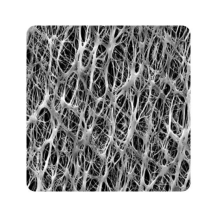
The process steps of mechanical drawing method include: mixing → pressing the initial blank → pressing or calendering forming → drawing forming → heat setting → cooling. Among them, stretching and molding is the most important step in the preparation of PTFE with different properties and structures. According to the different stretching directions, it can be divided into uniaxial stretching, biaxial stretching and multiaxial stretching. Different stretching rates and stretching ratios have a great influence on the pore size. It is worth mentioning that PTFE can be made ePTFE after special expansion treatment. The ePTFE not only inherits the original advantages of PTFE, but also has better performance in hydrophobicity, air permeability, mechanical strength, and chemical corrosion durability because of its porous structure and unique micropores. And in the medical field (such as synthetic artery and filter membrane), waterproof breathable has a wide range of applications.
1.2 pore-forming agent
Different from the stretching, the pore-forming agent method refers to the addition of different types and contents of pore-forming agents in the PTFE resin. After the embryo body is formed, the pore-forming agents are eliminated by the commonly used sintering or chemical methods, and the pores of different sizes are formed, the minimum can reach 0.01 μm. The pore-forming agent method is easy to operate and has low technological requirements, but the porosity, mechanical properties, and material density of the PTFE films formed are also different with different pore-forming agents used. At present, the main pore-forming agents used include fused cyclic aromatic hydrocarbons, BaCl2, ZnAc2, KCl, etc.
1.3 Carrier film formation
The carrier method is usually used in the inorganic membrane preparation process to prepare porous membranes through the principle of pores caused by inorganic particles occupying. In the preparation of PTFE microporous membrane, inorganic particles ZnAc2, NaCl, BaCl2, ZnO, CaCO3, etc. are usually used as pore-inducing agents. Firstly, the carrier and PTFE dispersion emulsion are mixed evenly.Then the flat sheet or hollow fiber membrane is made by direct scraping and coating or dry-wet spinning. Finally, the porous PTFE membrane is obtained by removing the carrier.
1.4 Electrospinning
Electrospinning is a process in which polymer solutions are spun under high voltage electrostatic pressure, which can prepare fibers with a diameter of tens to hundreds of nanometers. The resulting products have high porosity and large specific surface area. PTFE is generally difficult to electrospin because of its high melting temperature. Using other polymers to blend with PTFE can effectively improve the difficulty of melting, so that PTFE porous membrane can be prepared by electrospinning.
The additives added during the spinning process also affected the film properties, and in order to obtain a pure PTFE film, a sintering process was used to remove the additives after the film was formed. Different from PTFE membrane prepared by stretching method, the pores of PTFE films prepared by electrospinning are stacked by nanofibers, showing extremely high porosity and large specific surface area, while the PTFE films prepared by stretching method are composed of fiber connecting nodes to form a porous structure.
1.5 Other Methods
The membrane splitting method is a method by which the membrane is first prepared and then the fiber is prepared. The membrane is pulled to form a fiber network, and the fiber is formed after cutting. The fiber prepared by this method has a microporous structure, and the process is short, the operation is simple, the cost is low, and it is easy to be produced on a large scale.
In addition, a separation membrane with the surface characteristics of PTFE can also be prepared by spraying PTFE on the surface of the base film or other metal grids.